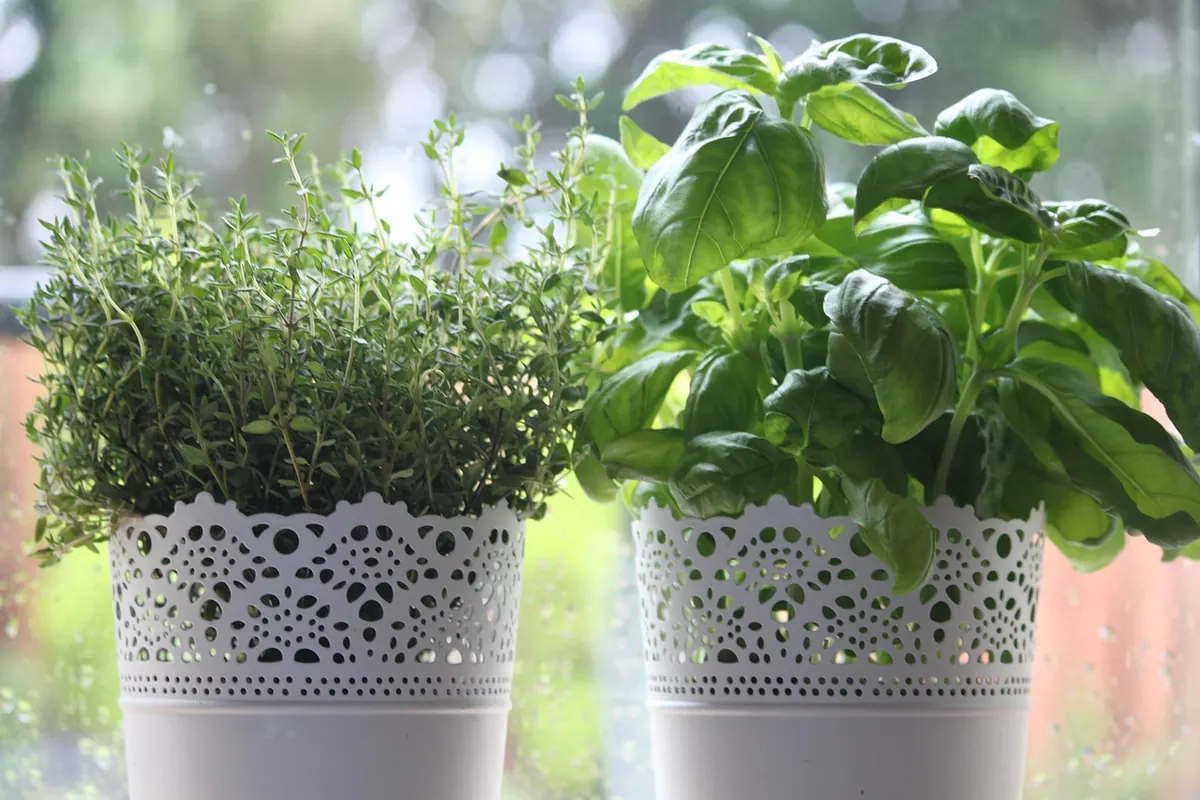
A windowsill is the smallest garden you will ever own, and quite possibly the most useful. It takes the light your home already gets, it sits a step from the kettle, and it will hold half a dozen pots of herbs that earn their keep — in cooking, in a teapot, or simply in the smell when you brush past them. The trick is choosing plants that suit British indoor conditions instead of fighting the ones that don't, then getting three things right: light, water and regular picking.
Why a windowsill works — and where it doesn't
Indoor herbs live in small pots with small root runs, in air that is often far drier than outside, especially near a radiator. That combination dictates almost everything else. A south-facing sill with several hours of direct sun will grow basil and coriander happily; a north-facing kitchen window won't, but it will keep parsley, mint and chives ticking over nicely.
Windowsills above radiators are the classic trap. Warm air rises, dries the compost from below and cooks the leaves above, so a pot that looked fine in October is often a crisp brown mess by January. If that's your only sill, move the pots to a table beside the window during the heating season, or turn the radiator down and keep a saucer of water nearby to lift the humidity.
Wherever they sit, pots need drainage holes and a saucer you empty. Standing water rots roots faster than anything else.
Which herbs are worth growing indoors
Start with herbs you actually eat or drink. A pot of thyme nobody touches is just housework.
Culinary herbs that cope well
- Basil — loves heat and sun, hates cold draughts and cold water. Easiest bought as a plant in spring.
- Flat-leaf parsley — the most forgiving of the bunch, and happy on an east or north sill.
- Chives — almost indestructible, and they regrow within a fortnight of cutting.
- Mint — vigorous to the point of cheeky. Give it its own pot or it will crowd out its neighbours.
- Coriander — quick and rewarding, but it runs to flower fast. Sow a few seeds every three weeks rather than filling one big pot.
- Thyme, rosemary and oregano — possible indoors, but they prefer a cool, bright, airy spot. A sunny porch windowsill suits them better than a warm kitchen.
Calming herbs for the teapot
- Lemon balm — a soft, lemon-scented mint relative, easy from a small plant and generous with leaves.
- Peppermint or spearmint — simple to grow and reliable for a fresh after-dinner cup.
- Chamomile — German chamomile is an annual that grows tall and needs strong light. It's a challenge on a windowsill, but a worthwhile one if your spot is genuinely sunny.
- Lavender — needs full sun, gritty compost and a cool winter. Treat it as an outdoor plant that comes in for a spell rather than a permanent indoor resident.
Light: the factor that decides everything
Aim for six hours of direct light a day for sun-lovers such as basil, thyme and lavender. Failing that, give plants the brightest spot in the house and rotate each pot a quarter turn every few days so they don't lean permanently towards the glass.
British winter light is genuinely weak, and growth will slow almost to a stop between November and February. Don't panic and don't overwater to compensate. Clean the inside of the glass, because grimy windows cut out more light than most of us realise, and move pots to your sunniest sill. If you want fresh basil in January, a small LED grow light is the honest answer.
Watering and feeding without drowning anything
Small pots dry out quickly in summer and slowly in winter, so water by feel rather than by calendar. Push a finger two centimetres into the compost: if it's dry at that depth, water; if it's damp, wait a day. Lifting the pot tells you almost as much — a light pot is a thirsty one.
When you do water, water properly. Soak until it runs out of the drainage holes, then empty the saucer ten minutes later. Little and often leaves the lower roots dry and the surface permanently wet, which is how root rot starts.
- Choose a pot about 2cm wider than the rootball, with drainage holes.
- Use a peat-free multipurpose compost, mixed with a handful of grit or perlite for Mediterranean herbs.
- Settle the plant at the same depth it was growing before, firm the compost gently and water it in.
- Feed with diluted liquid plant food every two weeks from spring to early autumn. Thyme, rosemary and oregano need less — half strength is plenty.
- Pot on again when roots start appearing through the holes in the base.
Harvesting: the bit that keeps plants productive
Regular picking is what turns a straggly supermarket pot into a bushy plant. Cutting the growing tip prompts sideshoots, so treat harvesting as pruning.
Pinch basil just above a pair of leaves, always from the top, and never take more than a third of the plant at once. Snip chives about 2cm above the compost and they will be back before you miss them. Cut mint as whole stems rather than individual leaves. With parsley, take the outer stalks from the base; with thyme and rosemary, snip the soft green tips, since old woody stems rarely regrow. Morning is the best time for flavour, before the sun has drawn the oils out of the leaves.
A note on drinking what you grow
For a simple infusion, pour just-boiled water over a small handful of fresh leaves, cover the cup for five minutes and strain. Lemon balm and mint work well together; chamomile needs roughly a heaped teaspoon of dried flowers per cup.
Herbal teas are generally gentle, but they are not automatically risk-free in quantity. If you are pregnant or breastfeeding, taking regular medication, or managing a health condition, check with a pharmacist or GP before making them a daily habit.
Start with three pots
Buy a basil, a mint and a chives plant, or sow basil and coriander from seed if you would rather watch something happen. Put them on your brightest windowsill, water by weight rather than routine, and pick something every week. Come late spring, most of these herbs will grow more strongly outside, so move the pots to a sheltered, sunny spot and bring them back in before the first cold nights of autumn. One windowsill, three pots, and a decent chance of a decent cup of mint tea by July.
Photo: TinaKirk / Pixabay